
1863 Letter by General Alfred Pleasonton, Directing General John Buford's Cavalry to Communicate with General John Sedgwick's 6th Corps at Second Battle of Rappahannock Station
1863 Letter by General Alfred Pleasonton, Directing General John Buford's Cavalry to Communicate with General John Sedgwick's 6th Corps at Second Battle of Rappahannock Station
Item No. 4867514
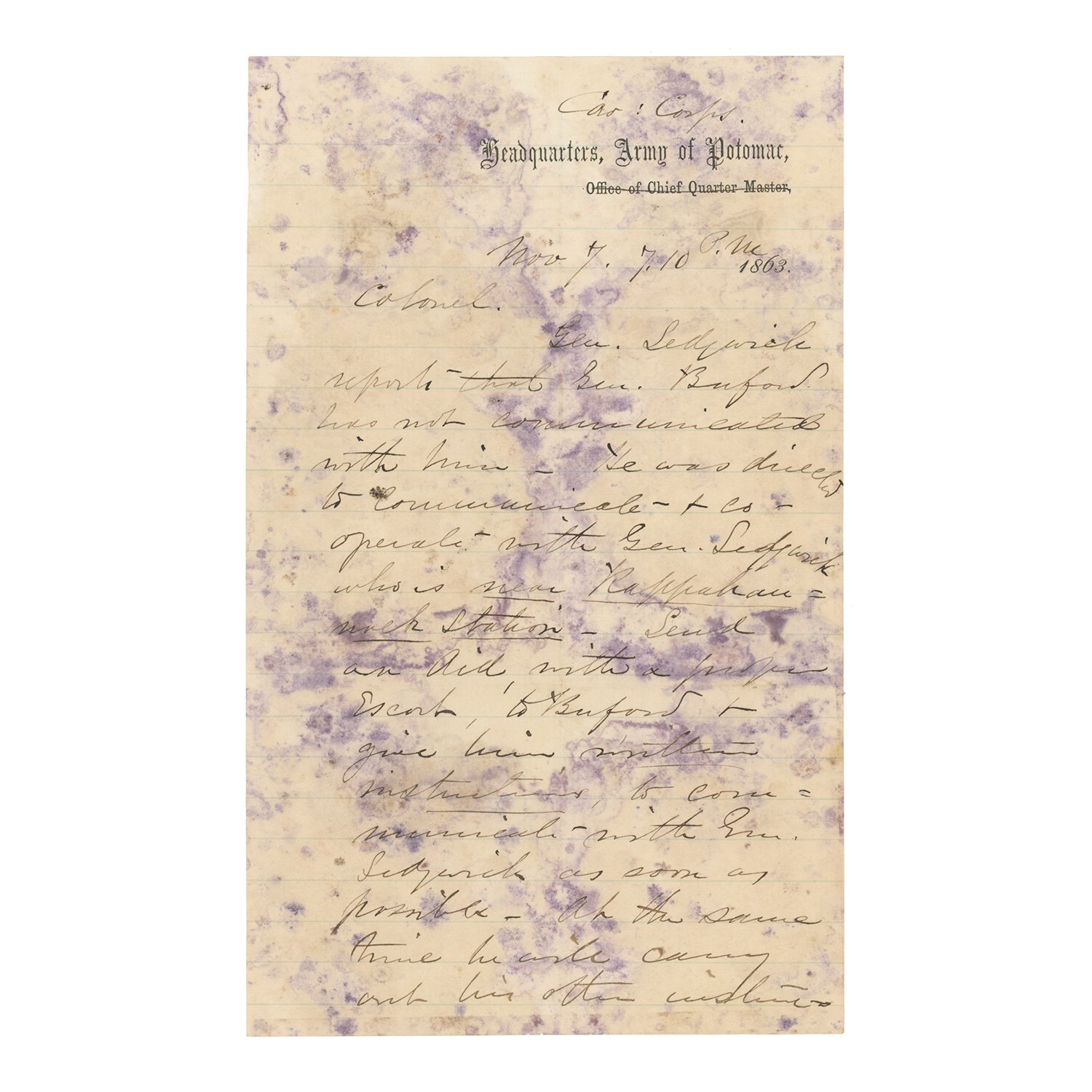
In this brief letter written on the evening of the Union Army’s victory at the Second Battle of Rappahannock Station—November 7, 1863—General Alfred Pleasonton, commanding the Cavalry Corps of the Army of the Potomac, directs an unidentified colonel to send written orders to General John Buford, commanding the 1st Division. He writes and signs:
Cav. Corps,
Headquarters, Army of Potomac,
Nov 7, 7.10 P.M. 1863Colonel,
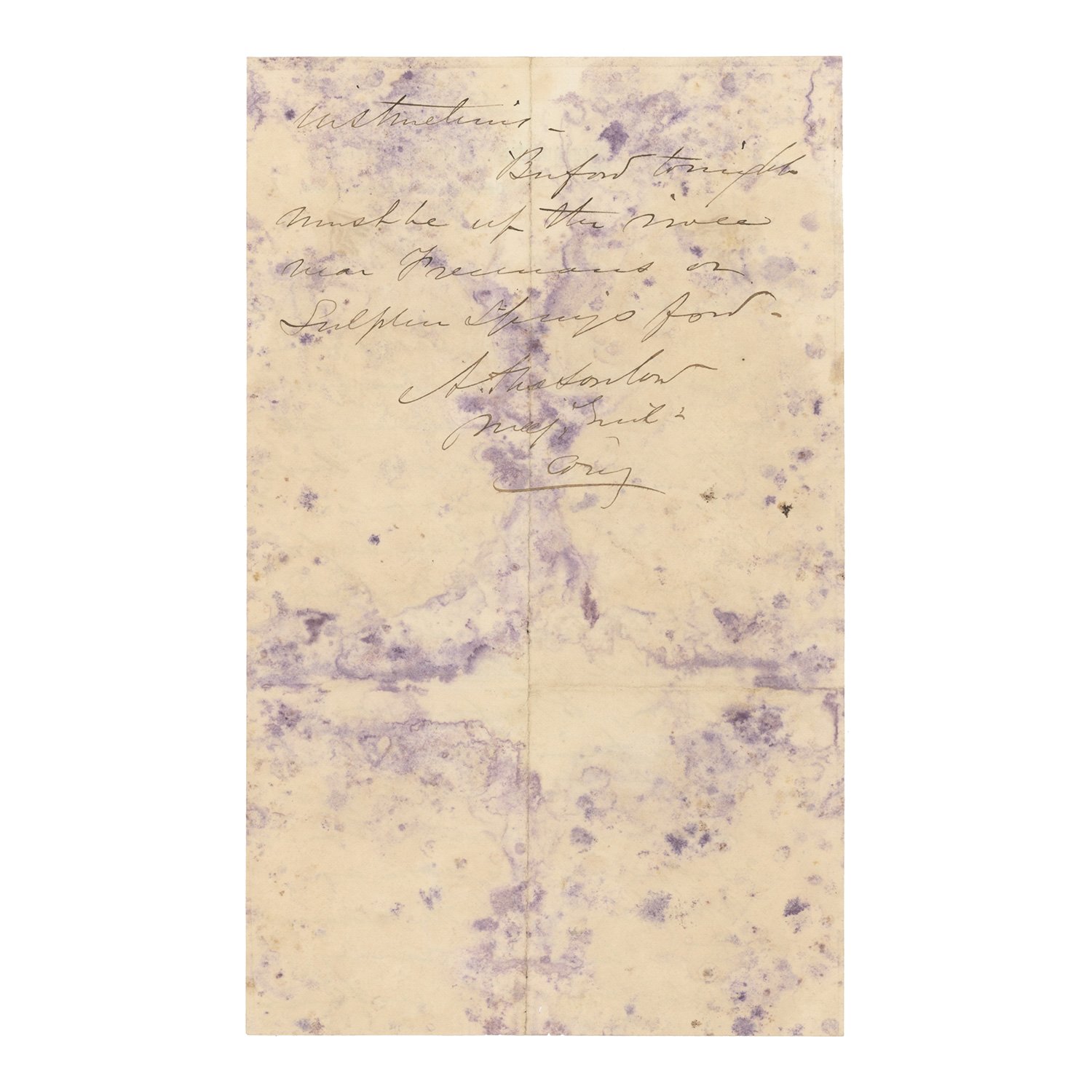
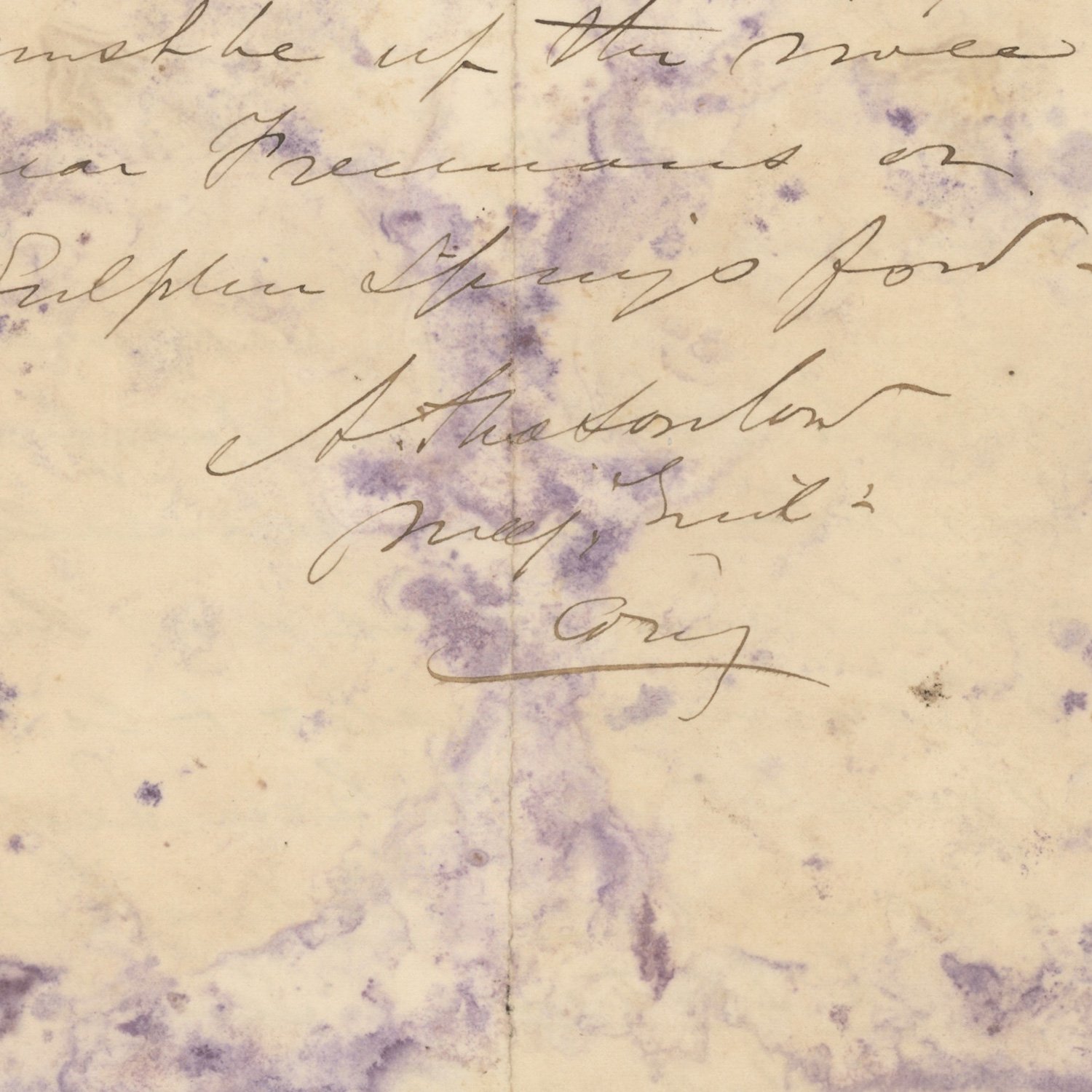
Gen. Sedgwick reports that Gen. Buford has not communicated with him. He was directed to communicate & co-operate with Gen. Sedgwick, who is near Rappahannock Station. Send an Aide with a proper escort to Buford & give him written instructions to communicate with Gen. Sedgwick as soon as possible. At the same time, he will carry out his other instructions.Buford tonight must be up the river near Freemans or Sulphur Springs ford.
A. Pleasonton
Maj. Genl.
Com’g.
By the time Pleasonton wrote the letter at 7:10 P.M., troops from General John Sedgwick’s Sixth Corps had already carried the rebel works at Rappahannock Station, capturing several cannon, hundreds of prisoners, and the pontoon bridge over the river. Buford’s division was then twelve miles upriver at Sulpher Springs where, according to the Official Records, his troops were just then relieving General David McM. Gregg’s pickets. Buford would cross the Rappahannock and Hazel Run the next day, November 8. These movements, as well as the crossing of other Union corps downriver at Kelly’s Ford, compelled Confederate General Robert E. Lee to withdraw south to a new defensive line behind the Rapidan River.
As a footnote, this movement was the last the Buford commanded. Likely sick with Typhoid fever at the time, he would be forced to retire from the front within days. He died December 16.
The letter was written on both sides of a letter sheet measuring about 4 3/4” x 8”. Pleasonton repurposed the letterhead of Chief Quartermaster Rufus Ingalls, striking out “Office of Chief Quarter Master” and replacing it with “Cav. Corps.” The paper exhibits some blue staining throughout, possibly ink transfer from another document. Otherwise it is very legible.