
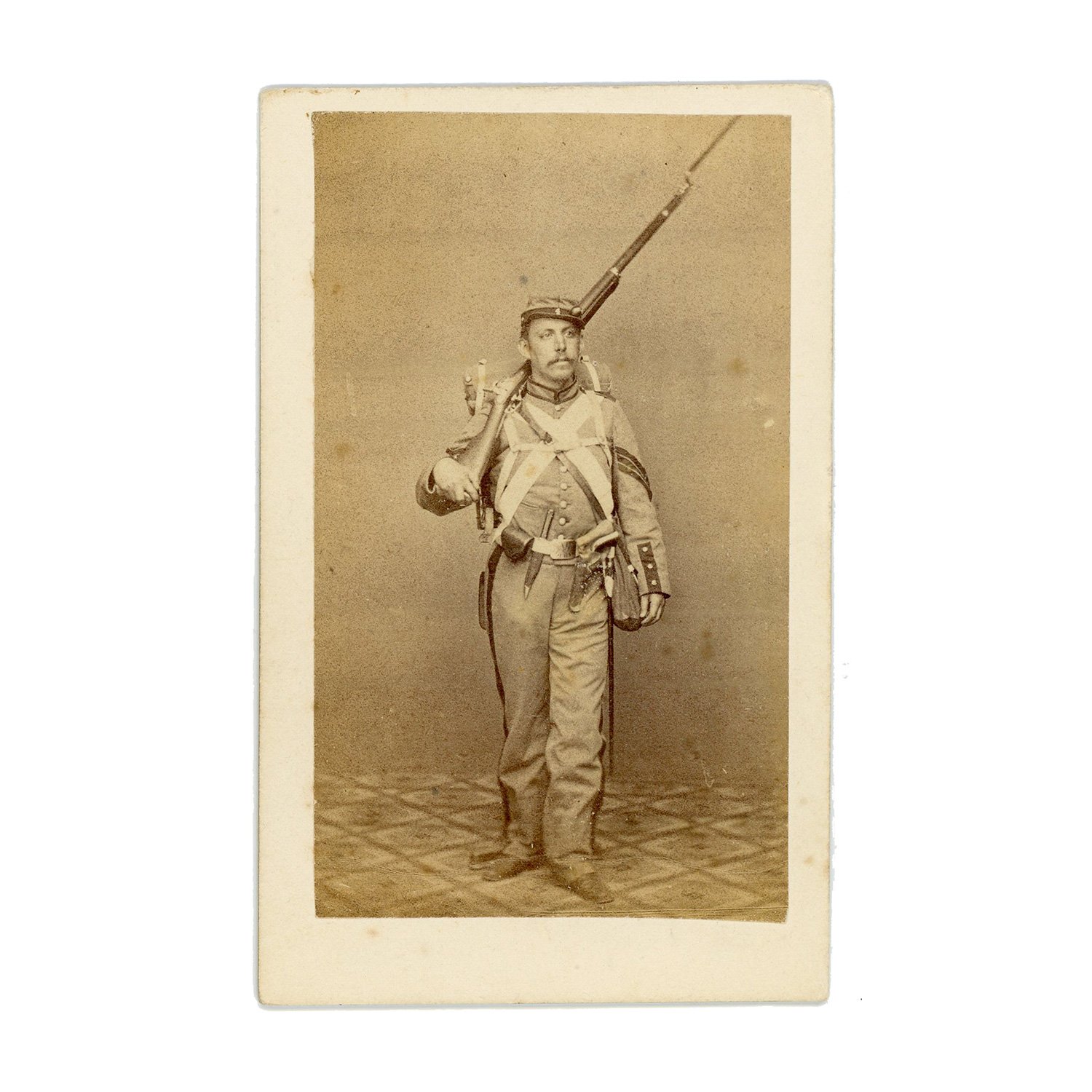
CDV of Sergeant Henry Everdell, 7th New York State Militia, Armed with Rifle, Revolver, and Knife
CDV of Sergeant Henry Everdell, 7th New York State Militia, Armed with Rifle, Revolver, and Knife
Item No. 7388204
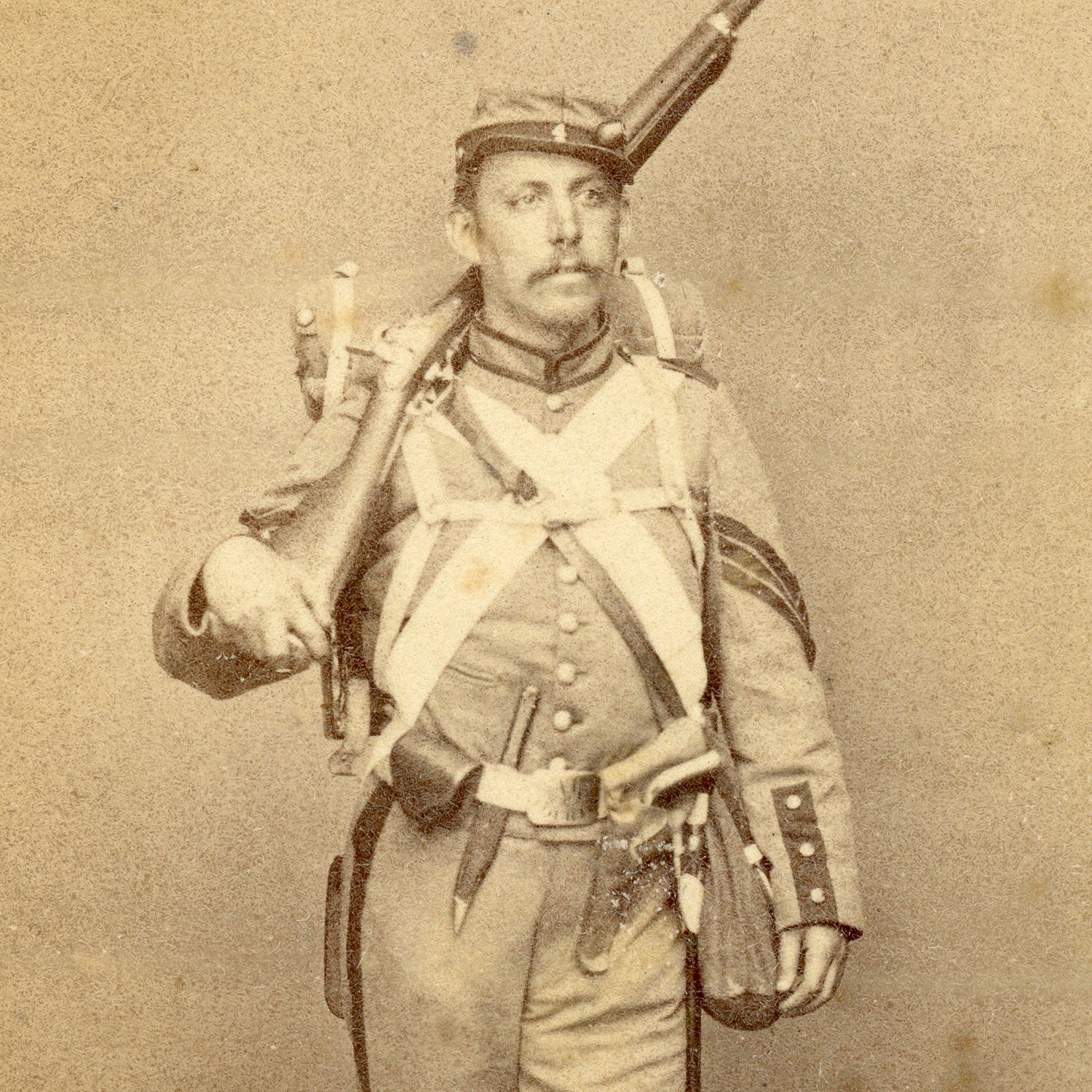
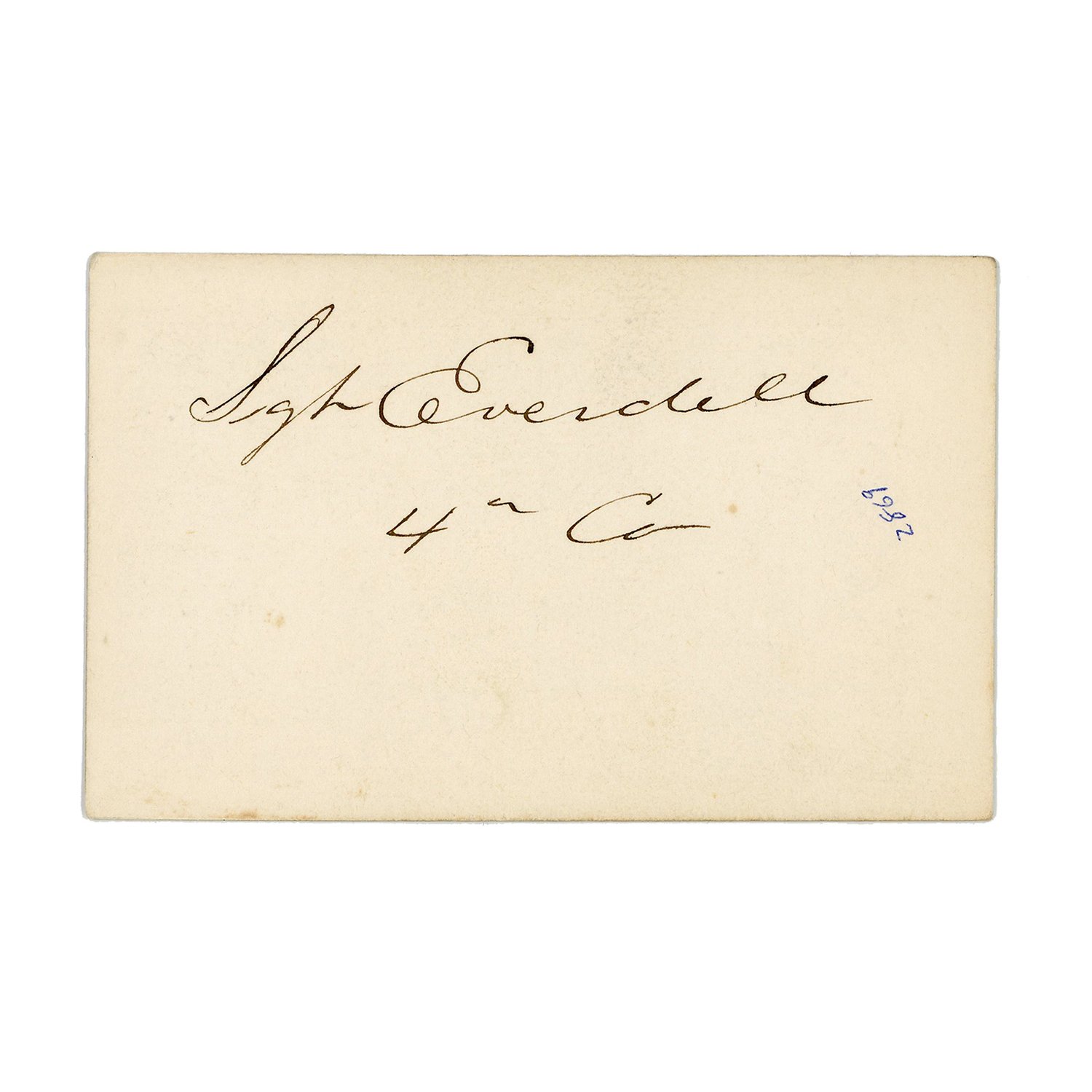
A CDV image of Sergeant Henry Everdell of the 7th New York State Militia, 4th Company (D). In this full-length pose, the sergeant poses in full kit. He holds his bayonet-tipped rifle over his shoulder while at his waist are a holstered revolver and knife. He wears the standard 1861 uniform of the 7th Regiment with knapsack, haversack, and buff white leather straps. Affixed to his cap is the number “4.” Written in period ink on the reverse is “Sgt Everdell / 4th Co.” While there is no studio imprint, the flooring and backdrop are consistent with Mathew Brady’s studio located on Pennsylvania Avenue in Washington, DC. On the reverse is Ferris’s ink signature. Measures 2 1/2” x 4”.
Everdell served in all three of the 7th Regiment’s deployments in 1861, 1862, and 1863. This image dates from the 1861 call-up.
The 7th New York State Militia, known as the “Silk Stocking Regiment” for its socially prominent New York City membership, played an important role early in the Civil War. They first entered federal service in April 1861, responding swiftly to President Lincoln’s call and making a celebrated march to Washington via Annapolis after riots in Baltimore cut the usual rail route. Stationed at Camp Cameron, they performed guard and garrison duty that helped secure the vulnerable capital before mustering out in June. They were called up again in May 1862 during renewed fears for Washington’s safety amid Stonewall Jackson’s Valley Campaign, once more serving three months in the city’s defensive forts without seeing major combat. In 1863, the regiment was mobilized again during the Gettysburg Campaign and the New York City Draft Riots. Though their wartime service was brief and primarily defensive, the 7th’s prompt mobilization, precision, and high visibility made them symbolically significant, and they remained a prominent part of New York’s National Guard throughout and after the war.