
Signed CDV of Corporal Philip Schuyler, 7th New York State Militia, Armed with Rifle
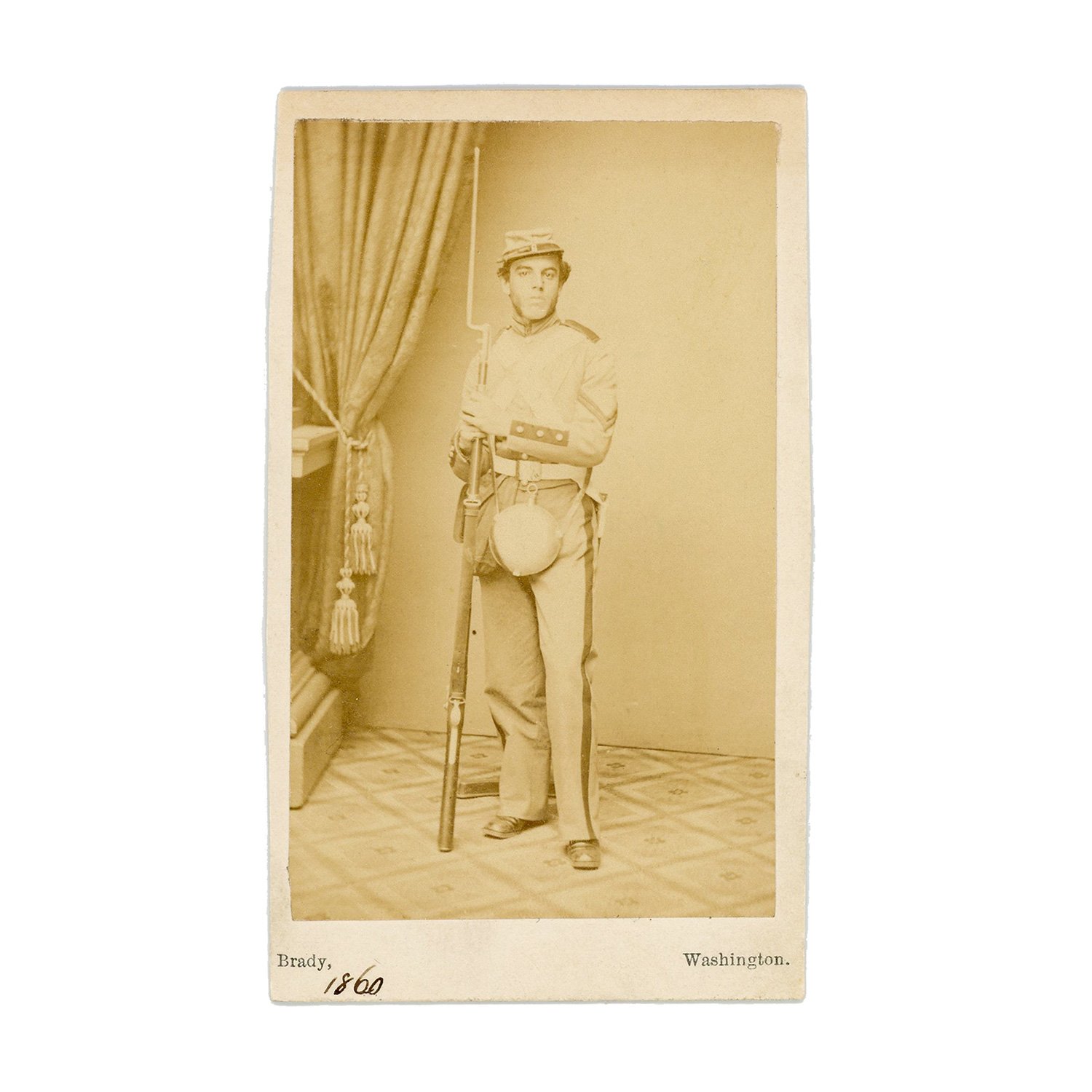
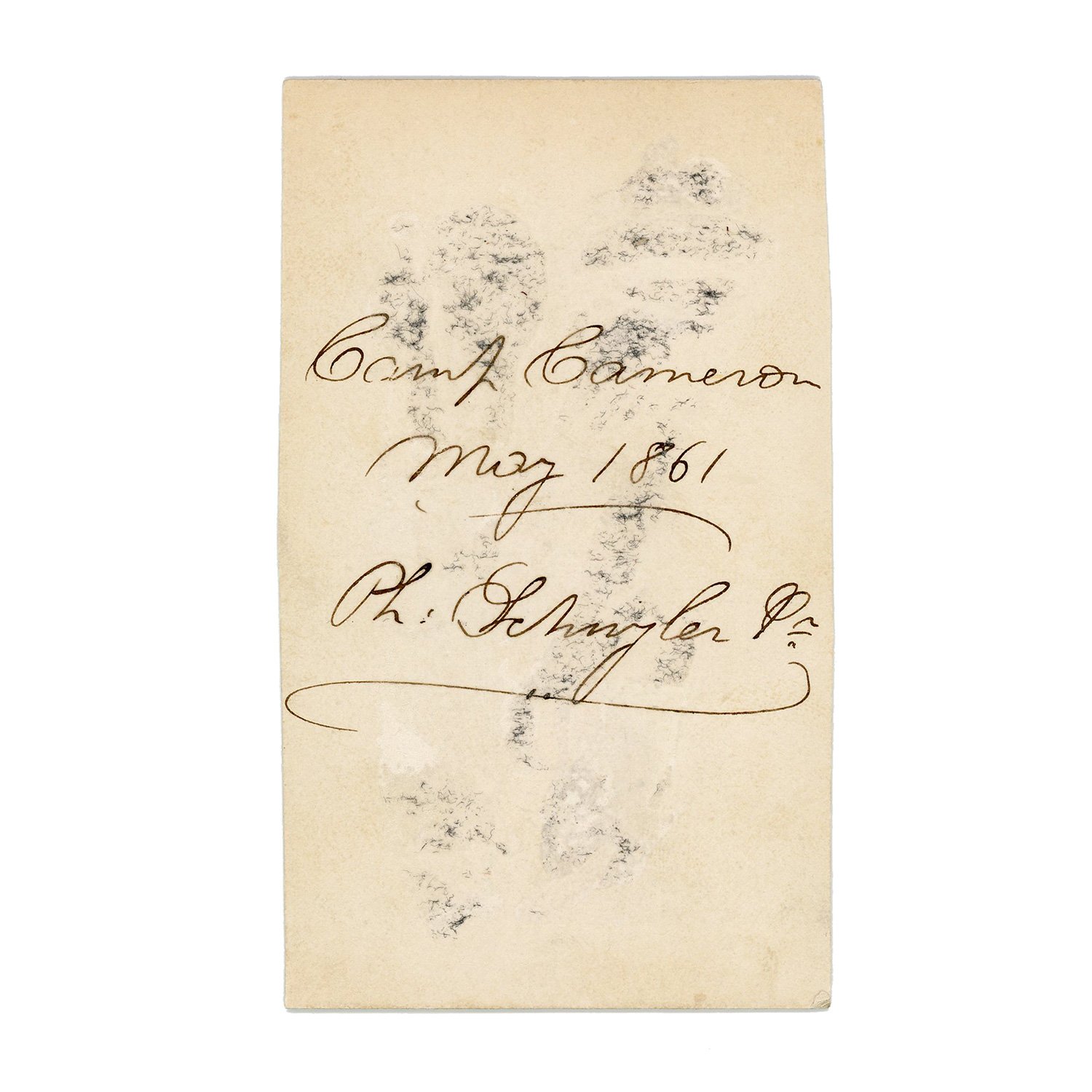
Signed CDV of Corporal Philip Schuyler, 7th New York State Militia, Armed with Rifle
Item No. 8199808
A CDV image of Private Phillip Schuyler of the 7th New York State Militia, 6th Company (F), posing with is rifle. He wears the standard uniform of the 7th Regiment in 1861 with buff white leathers. The number “6” is affixed to the front of his cap. At the base of the mount is the imprint of Mathew Brady’s studio located on Pennsylvania Avenue in Washington, DC. On the reverse is Schuyler’s ink signature and a date of May 1861. The carte measures about 2 1/2” x 4”.
This image must have been made right before May 14, 1861, when Schuyler was commissioned first lieutenant in the 14th United States Infantry, one of the new regular army units authorized be President Lincoln that month. Schuyler would become the regiment’s adjutant that November, captain in July 1862, and received a brevet major’s commission in April 1865.
The 7th New York State Militia, known as the “Silk Stocking Regiment” for its socially prominent New York City membership, played an important role early in the Civil War. They first entered federal service in April 1861, responding swiftly to President Lincoln’s call and making a celebrated march to Washington via Annapolis after riots in Baltimore cut the usual rail route. Stationed at Camp Cameron, they performed guard and garrison duty that helped secure the vulnerable capital before mustering out in June. They were called up again in May 1862 during renewed fears for Washington’s safety amid Stonewall Jackson’s Valley Campaign, once more serving three months in the city’s defensive forts without seeing major combat. In 1863, the regiment was mobilized again during the Gettysburg Campaign and the New York City Draft Riots. Though their wartime service was brief and primarily defensive, the 7th’s prompt mobilization, precision, and high visibility made them symbolically significant, and they remained a prominent part of New York’s National Guard throughout and after the war.