
CDV of General George A. Custer (K-21) by Mathew Brady, October 8, 1863
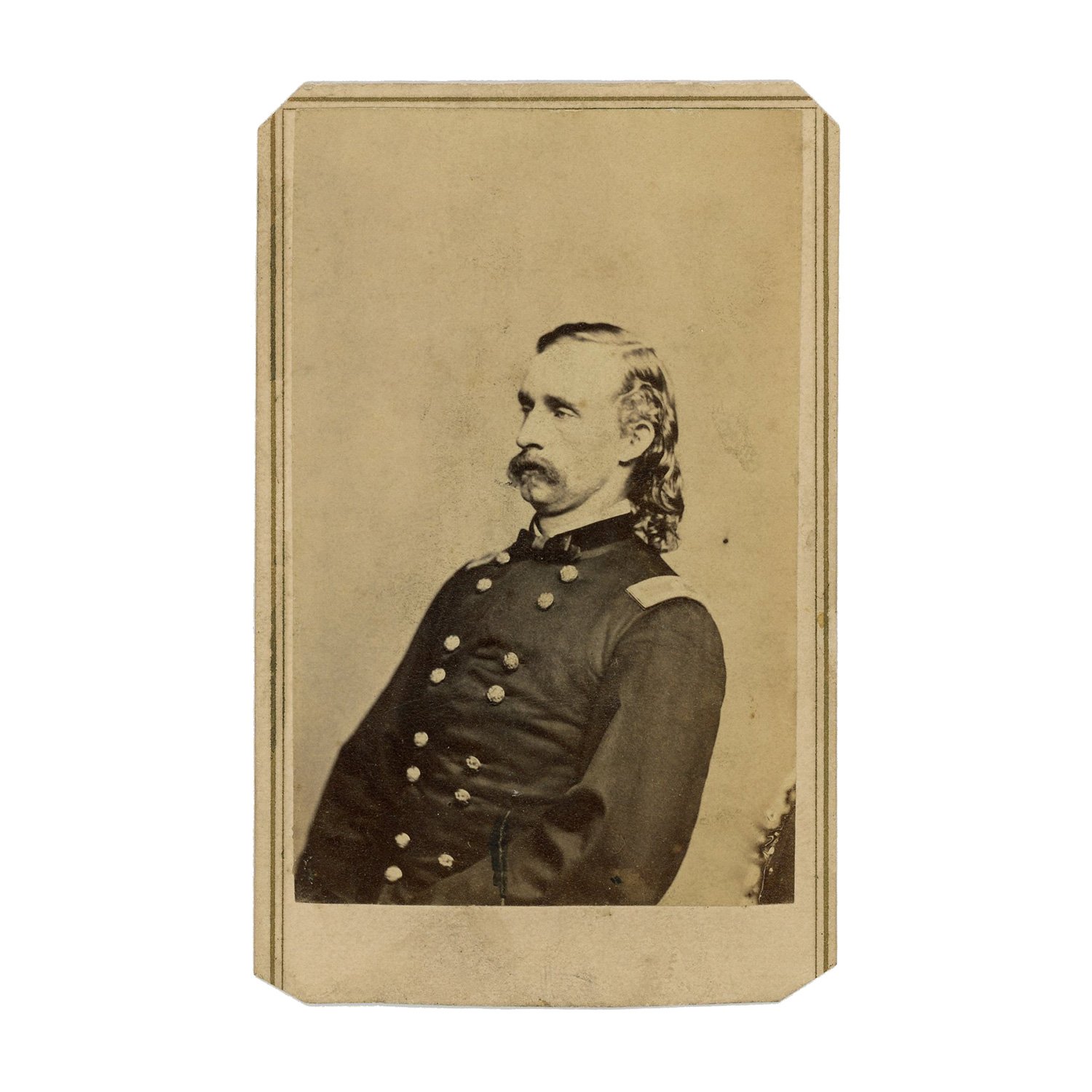
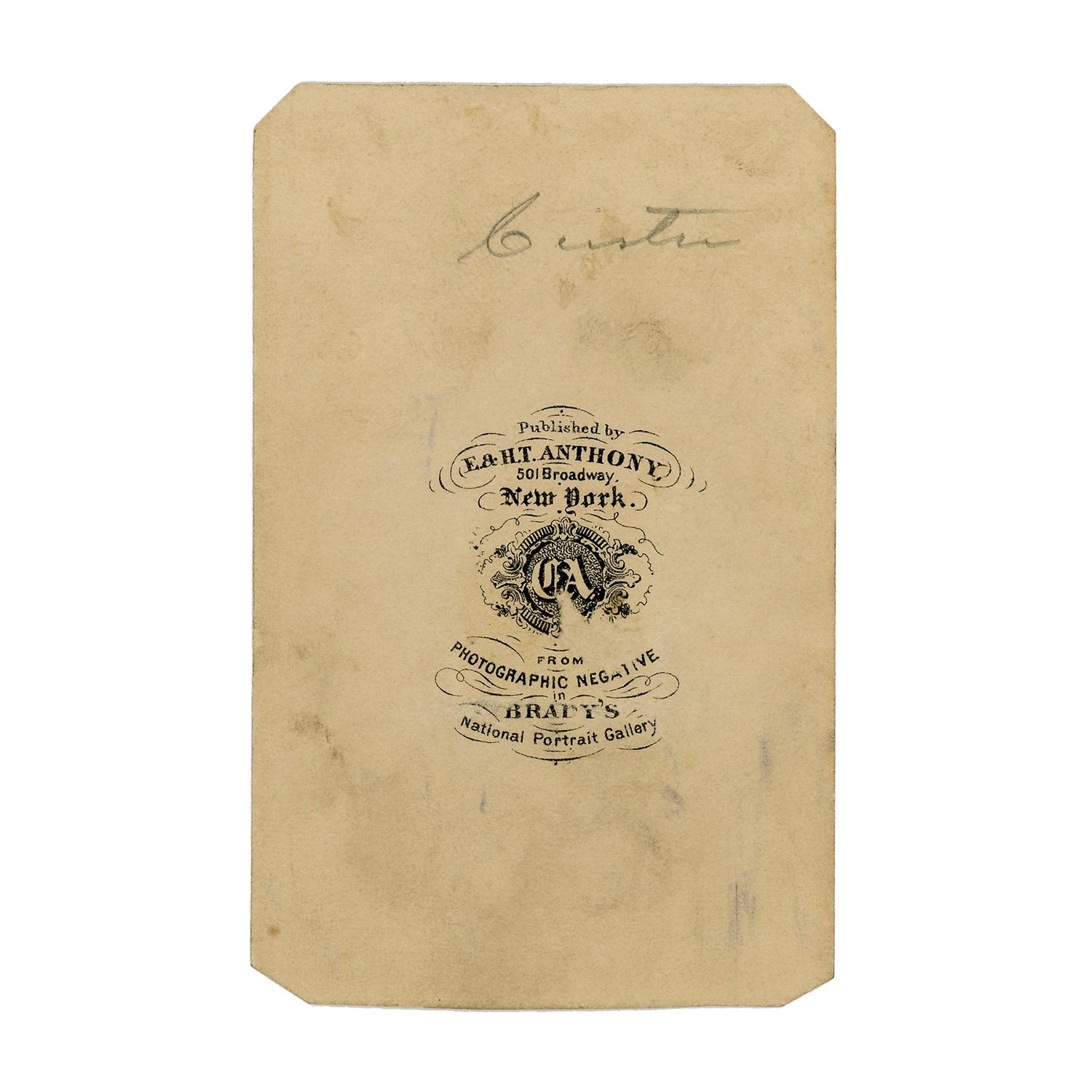
CDV of General George A. Custer (K-21) by Mathew Brady, October 8, 1863
Item No. 6855307
A CDV portrait of George Armstrong Custer. This sitting is catalogued as number K-21 in D. Mark Katz’s book Custer in Photographs (p. 18). Katz indicates that Custer sat for this image in Mathew Brady’s studio on October 8, 1863. The reverse bears the imprint of E. & H. T. Anthony of New York, with credit to Brady’s original negative. The carte was part of the album of Bernard J. D. Irwin, the noted army surgeon, naturalist, and Medal of Honor recipient. Custer and Irwin had served together in 1866-67 at Fort Riley, where Custer was organizing the 7th Cavalry and Irwin was serving as post surgeon. The carte measures about 2 3/8” x 4” and has slightly trimmed corners.
Custer graduated from West Point in 1861, finishing last in his class, and was immediately commissioned into the cavalry at the outbreak of the Civil War. He rose rapidly through the ranks, serving on the staff of General George B. McClellan before being promoted to brigadier general of volunteers in 1863 at the age of twenty-three. Custer distinguished himself as a bold cavalry commander in the Army of the Potomac, leading the Michigan Brigade in numerous engagements including Gettysburg, the Shenandoah Valley campaigns, and the Appomattox Campaign. Mustered out of volunteer service at the end of the war, he reverted to his Regular Army rank and was appointed lieutenant colonel of the 7th U.S. Cavalry. In the postwar years he served on the western frontier, participating in campaigns against Plains tribes. He is best known for his role in the Great Sioux War, where, on June 25, 1876, he and five companies of the 7th Cavalry were killed at the Battle of the Little Bighorn while attacking a large encampment of Lakota, Northern Cheyenne, and Arapaho.