
CDV of General Alexander Shaler — Brigade Commander at Gettysburg — Received Medal of Honor for Action at Second Battle of Fredericksburg
CDV of General Alexander Shaler — Brigade Commander at Gettysburg — Received Medal of Honor for Action at Second Battle of Fredericksburg
Item No. 4047542
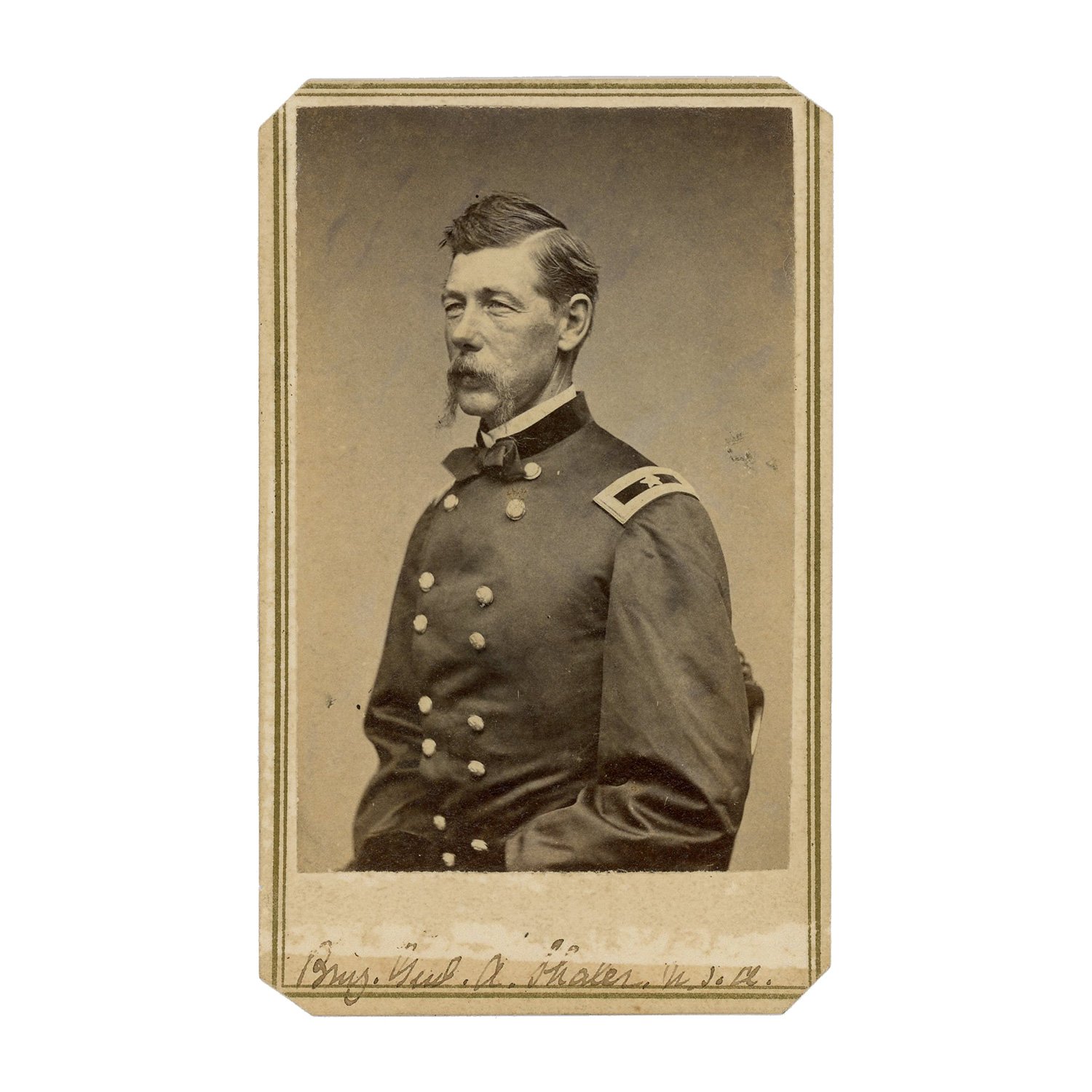
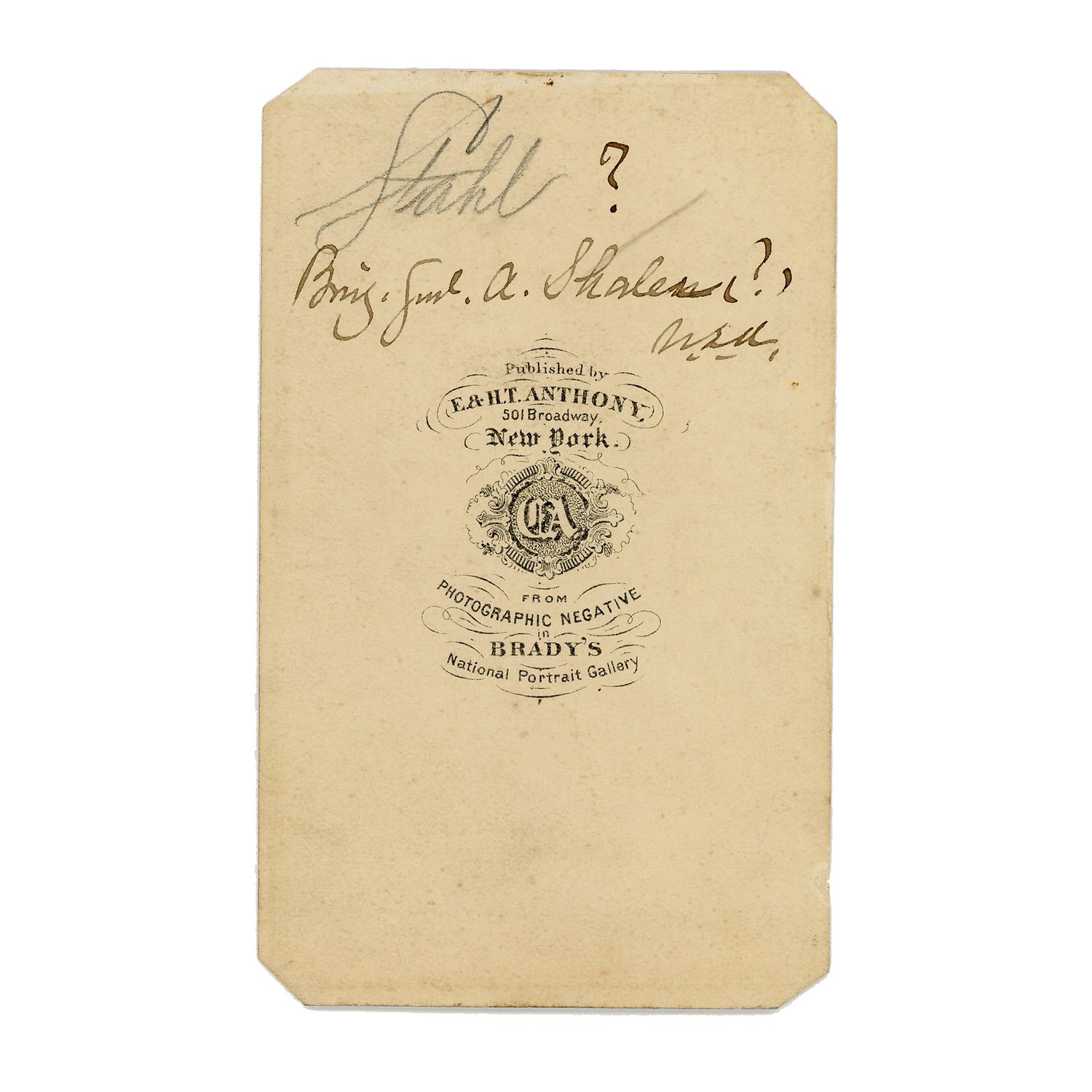
A CDV portrait of Brigadier General Alexander Shaler, best known for his leadership at the Second Battle of Fredericksburg, for which he later received the Medal of Honor. Shaler is identified on both the front and reverse of the carte in the hand of Bernard J. D. Irwin, the noted army surgeon, naturalist, and fellow Medal of Honor recipient. The reverse bears the imprint of E. & H. T. Anthony of New York, with credit to Mathew Brady’s original negative. The photograph was part of the Irwin family album. Shaler and Irwin likely became acquainted late in the war when Shaler served in Arkansas, or in postwar New York social circles. Measures about 2 3/8” x 4” with slightly trimmed corners.
Shaler entered the Civil War as lieutenant colonel of the 65th New York Infantry and rose to command a brigade in the VI Corps, Army of the Potomac. He was awarded the Medal of Honor for his gallantry at the Second Battle of Fredericksburg, where he seized a flag and led his men in the assault on Marye’s Heights. At the Battle of Gettysburg his brigade was engaged on the Union right and later held in reserve during the repulse of Pickett’s Charge. During the Battle of the Wilderness he was captured while attempting to rally his men during a Confederate flank attack and spent time as a prisoner of war before being exchanged. Returning to duty, he later commanded troops in the Department of Arkansas, including service in the White River district. After the war, Shaler remained active in the New York National Guard, ultimately rising to major general, and was associated with the early development of the National Rifle Association. He later served as mayor of Ridgefield, New Jersey and was involved in New York City public affairs, though his later career was touched by controversy. He died in 1911.